
How To Change A Car Key Fob Battery (And What To Do If It Got Wet)
A practical guide to replacing your fob battery, recognising other key faults and protecting a key after water damage.
The short answer
Car key battery replacement is usually straightforward when the fob has a user-replaceable battery: check the handbook, fit the specified cell and follow the opening instructions carefully. If the key got wet, remove the battery where safely possible and avoid testing it while damp. A weak remote does not automatically mean you need a new key, but forcing a sealed case can turn a small fault into a bigger repair. This guide explains what you can check yourself and when to stop.
Is the key fob battery running low?
A weakening key fob battery often causes reduced remote range, intermittent button response or a low-battery message on the dashboard. Keyless entry may become unreliable too. These signs are useful clues rather than a diagnosis: damaged buttons, poor battery contacts and faults elsewhere in the vehicle can produce similar symptoms.
Notice which function has changed. If the buttons work only when you stand close to the car, a tired battery is a sensible first suspect. If just one button fails while the others respond normally, that points more towards a button or contact problem.
A remote key contains functions that are not necessarily powered in the same way. On many conventional bladed keys, the immobiliser transponder does not depend on the replaceable remote battery. The buttons can therefore stop working while the same key still starts the engine.
If you have a working spare, compare the two in the same place. When both behave badly in one car park but work elsewhere, replacing both batteries may not address the cause. Note any dashboard message exactly rather than describing everything as a dead key.
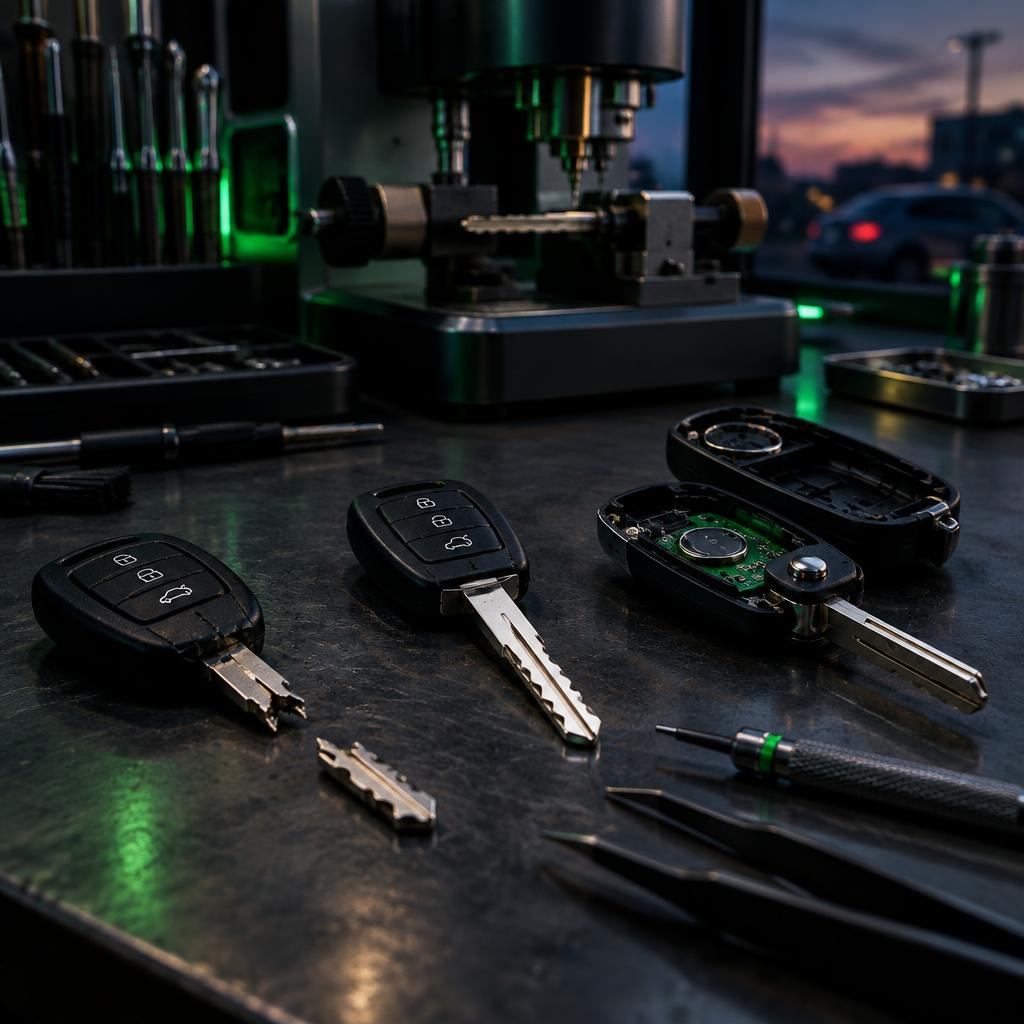
Before opening the case: identify the right battery
Check the vehicle handbook for the correct battery designation and whether replacement is intended to be a DIY task. Similar-looking coin cells can have different thicknesses or specifications. A battery that squeezes into the holder is not necessarily the correct one.
Use the marking on the existing cell as a cross-check, not your only reference: someone may previously have fitted the wrong battery. Choose a fresh replacement from a reputable supplier and leave it packaged until you are ready to install it.
Not every fob has a replaceable coin cell. Some rechargeable or sealed keys need specialist attention rather than an owner battery change. If the handbook gives no opening procedure, do not assume the case should split along its visible seam.
Work indoors over a clear tray or pale cloth, with dry hands and good lighting. Small parts are easier to spot there than beside a vehicle on a gravel New Forest car park. Keep the spare key separate so it remains available if the opened fob cannot immediately be reassembled.
Keep new and used coin cells away from children and pets. Suspected swallowing needs immediate emergency medical advice; do not wait for symptoms. Set the old battery aside securely for appropriate battery recycling.
How do you open a car key fob safely?
The safe opening point depends on the key, so follow the handbook rather than levering at whichever seam looks easiest. Some fobs have a removable cover, while others reveal an opening point after the emergency blade is released. Stop if the case resists unexpectedly, bends or begins to split.
If you are searching for how to open a car key fob, match any instructions to the actual key design, not just the vehicle badge. The same model can have different keys depending on its age, equipment and market.
Release a removable emergency blade only as described by the manufacturer. Where the handbook specifies an opening aid, use the recommended type and position. Avoid sharp knives, which can slip into your hand or damage the contents.
Open the case over your tray and note how the cover, button pad and battery sit. A quick photograph before removing anything makes reassembly easier. On some designs, small internal components can become loose when the shell separates.
You should not need to bend the circuit board or detach switches for a routine battery change. Leave unfamiliar parts alone. If the housing is cracked, the holder is loose or corrosion is visible, key repair assessment is more appropriate than forcing everything back together.
Car key battery replacement and the backup start position
Remove the old battery using the handbook’s instructions, without bending the retaining contacts. Note which way its positive and negative faces sit. Do not assume that the marked face always points upwards: orientation varies between key designs.
Fit the specified replacement in the same orientation, ensuring it sits properly beneath any retaining edges. Avoid touching the contact surfaces unnecessarily. Never stack cells, pack out the holder with foil or bend contacts to make an unsuitable battery fit.
Before closing the case, check that the button pad is aligned and any sealing component sits in its original position. Refit the cover gently. If it will not close evenly, reopen it and check the assembly rather than squeezing harder.
Test the buttons with the key in your hand and a spare available where possible. Then confirm that the vehicle recognises the key for starting. A working indicator light on the fob alone does not establish that every function is working.
Many keyless vehicles have a designated backup start position for a recognised key whose fob battery is flat. This is commonly described in the handbook, but its location and the required owner actions vary. Follow those vehicle-specific instructions; the feature does not bypass the immobiliser or make an unrecognised key valid.
Why does the key still fail after a new battery?
If a fresh battery makes no difference, recheck its specification, orientation and seating before assuming the key needs replacing. Worn contacts, damaged switches or a failed circuit board may be responsible. Some remotes need model-specific resynchronisation, but an ordinary battery change does not usually erase the key’s immobiliser identity.
Keep the symptoms separate. Buttons that fail while the vehicle still starts suggest a different problem from a key that unlocks normally but is not recognised for starting. Tell whoever assesses it which functions work, which fail and whether the spare behaves differently.
A new battery can also be faulty or have deteriorated in storage. Check its packaging and condition, but avoid repeated case opening once the obvious fitting checks are complete. Fragile clips and worn housings do not improve with repeated levering.
Remote pairing and immobiliser authorisation are different matters. Where resynchronisation is needed, use the handbook or seek advice rather than trying unrelated internet sequences. Car key programming guidance can help distinguish recognition problems from physical key damage.
The vehicle itself also needs electrical power to respond. If both keys fail and the dashboard or central locking behaves unusually, mention those symptoms. Buying another fob before the underlying fault is identified can leave you with the same problem.
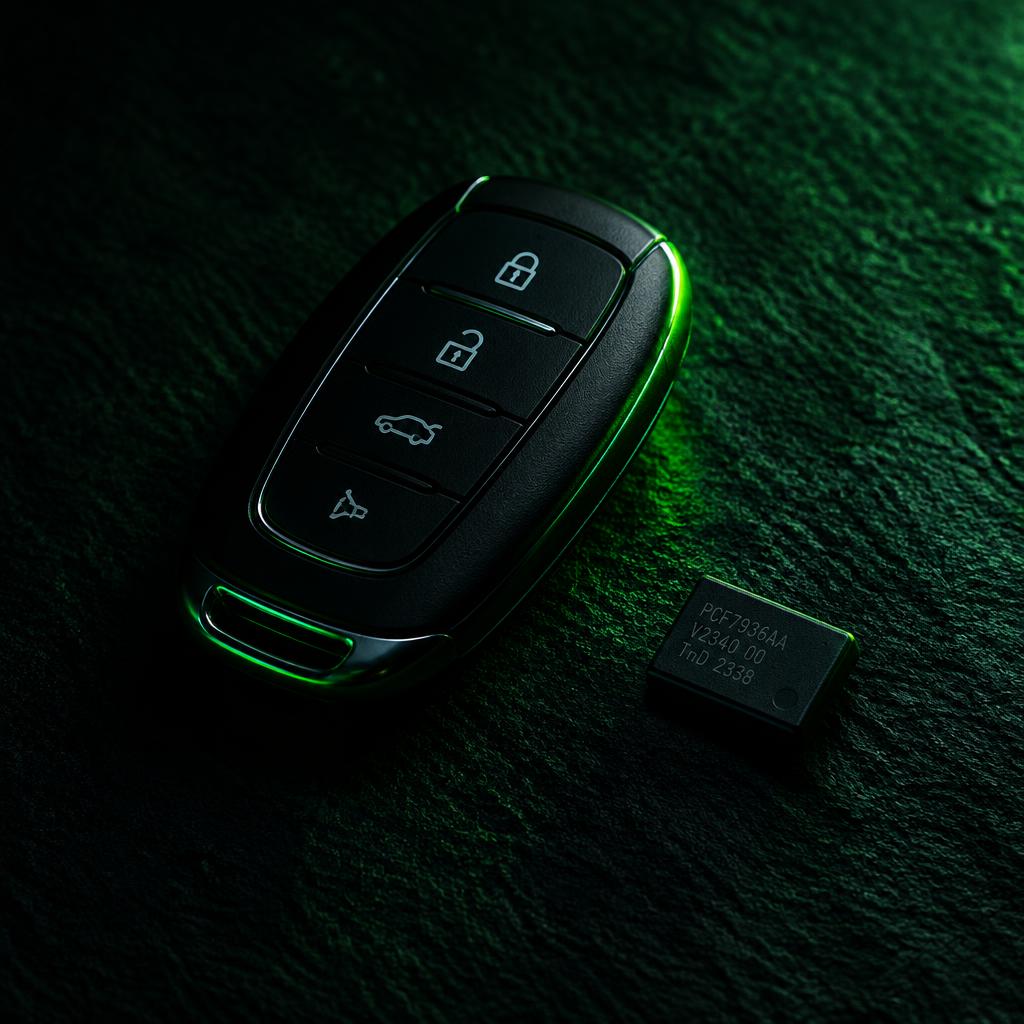
A car key in the washing machine or the sea
Finding a car key in the washing machine calls for a different response from an ordinary flat battery. Stop pressing its buttons. If the design allows safe owner access, remove the battery promptly; if it is sealed or rechargeable, do not cut the case open or attempt to disconnect internal parts.
Blot away surface moisture with a lint-free cloth. Leave accessible parts in a dry, ventilated place at room temperature, protected from children and pets. Do not use a hairdryer, radiator, oven or other heat source: heat can damage the casing and electronics.
Dry thoroughly before considering power or testing, but do not treat a dry exterior as proof that the inside is dry. There is no reliable universal drying time. Rice is not a substitute for inspection and does not remove detergent or salt deposits.
Seawater needs particular care. A key dropped during a coastal walk near the New Forest may retain corrosive salt after the moisture disappears. Detergent from a wash can also leave contamination. Arrange prompt assessment rather than fitting a fresh battery and repeatedly checking whether it works.
The transponder often survives a soaking, particularly where it is a separate protected component, but this varies with the design. Surviving engine-start authorisation does not prove the remote board is healthy. Describe the liquid involved and whether the key was operated afterwards when requesting help with a water-damaged key.
Your practical next steps
Choose the next action from the symptoms, rather than treating every unresponsive key as a battery problem. If this is your only working key, avoid experimenting with an unfamiliar case or unverified instructions.
For reduced range, check the handbook for a user-replaceable battery and its exact designation.
Before opening, prepare a clear workspace and photograph the battery orientation.
After replacement, check both remote operation and vehicle recognition.
For a flat keyless fob, consult the handbook’s backup start instructions.
After soaking, remove an accessible battery, avoid heat and arrange assessment for contamination.
If the fault remains, record the dashboard message and compare with a spare.
Related services
For damaged buttons, broken housings or water exposure, see broken car keys. The car key programming page outlines the service for vehicle recognition issues without presenting programming as a solution to every key fault.
More questions
Get a free quote in two quick steps
Send your details and we'll come back to you with a price. For anything urgent, calling is quickest.
- Price explained before any work
- No upfront payment
- Deal direct with the technician
Need a hand with your car key?
For a fault these checks do not clarify, share the registration, key symptoms and any history of water exposure with New Forest Auto Locksmith. Work is carried out at the vehicle, and a price is provided before travelling so you can decide how to proceed.
“I had lost my car keys and Alec came within the hour and made a new key in a matter of minutes! He was super efficient and professional. Would highly recommend!”